 You're standing in the hallway of your Hallandale Beach condo, flashlight in hand, staring at a return grille that's been rattling every time the AC kicks on. The plastic tabs snapped months ago — probably during that July heat wave when the system ran nonstop — and now the cover hangs crooked, leaking dust into the living room every cycle. You drove to the big-box store on Federal Highway, grabbed a "standard 10 by 10" off the shelf, got home, and realized the screw holes don't line up. The old grille measures 9¾ inches across the neck. The new one is a full 10. That quarter-inch gap means whistling air, wasted cooling, and another trip back through traffic on Hallandale Beach Boulevard.
Measure the duct opening itself — not the old cover — across the narrowest part of the metal neck where the grille sits. Most residential vents in Hallandale Beach and Broward use 4×10, 6×10, 8×10, or 10×10 inch neck sizes, but always measure width and height to the nearest 1/8 inch before buying. Write both numbers down and match them to the replacement's listed neck dimensions, not the overall frame size.
What's the difference between neck size and overall size?
The neck is the metal box that slides into your duct opening. The overall size includes the flange — the flat rim that sits against your ceiling or wall. A grille labeled "10×10" might have a 9½×9½ inch neck and a 11×11 inch flange. If you order by the flange number, the neck won't fit. Pull the old cover off, shine your light into the duct, and measure the metal box opening width and height. That's the only number that matters.How do I measure a floor register versus a ceiling grille?
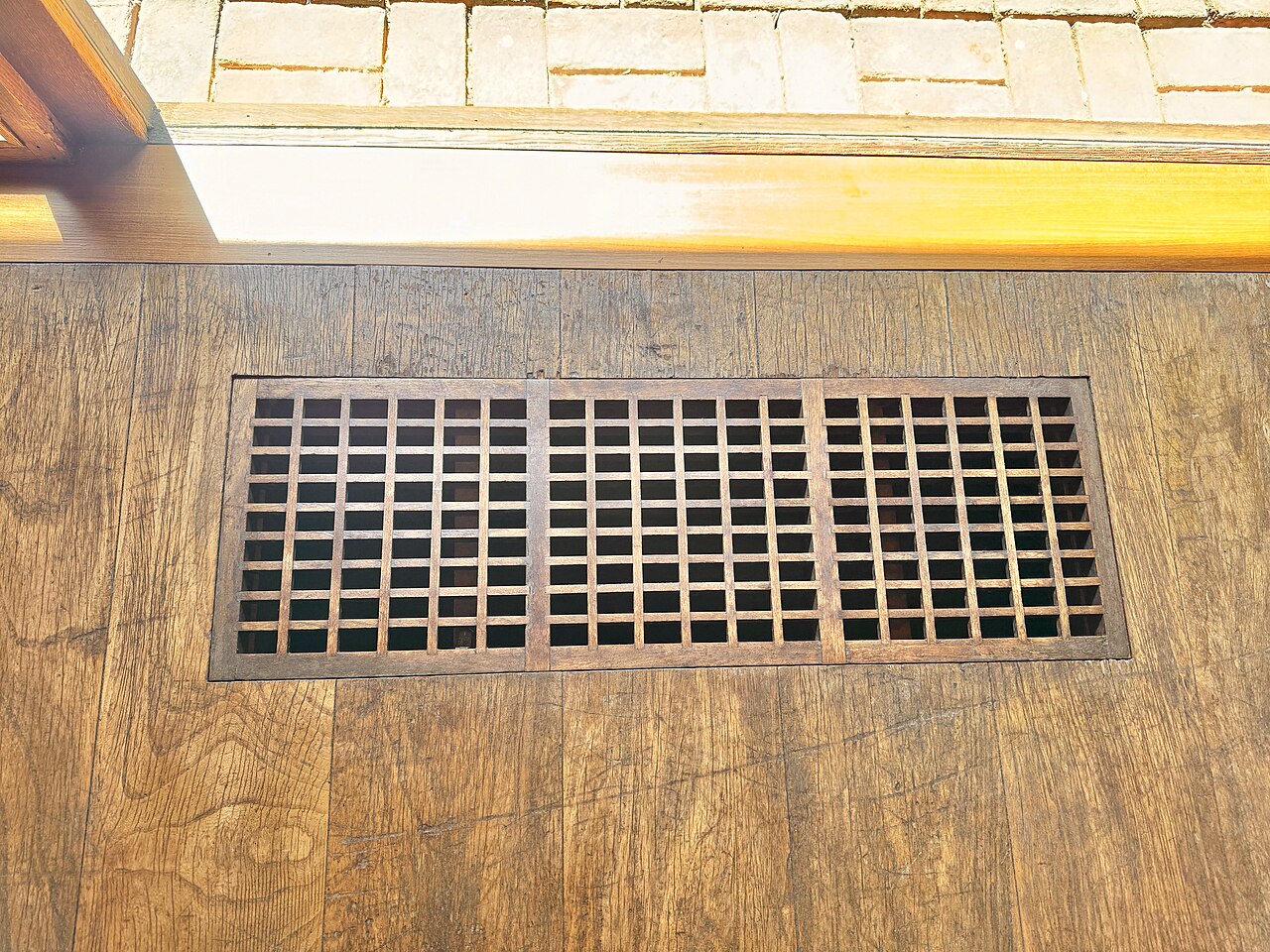
Floor registers sit in a boot that sticks up through the subfloor. Measure the boot's inside opening — width first, then length. Ceiling grilles mount into a metal can or straight into drywall. Measure the can's inside dimensions. Wall returns often have a filter rack behind them; measure the rack opening, not the grille face. In Broward condos built in the '80s and '90s, you'll see a lot of 10×20 and 12×20 filter grilles. Single-family homes near Pembroke Pines tend toward 14×14 or 16×16 ceiling supplies.Why do my measurements come out weird — like 9⅝ by 9⅝?
Metal expands and contracts. The original installer cut the duct hole slightly oversized so the neck would slip in, then sealed the gap with mastic or foil tape. Over twenty South Florida summers, that metal has moved. Measure three times: top, middle, bottom for width; left, center, right for height. Use the smallest number you get. That's your true neck size. Round down to the nearest 1/8 inch. If you're between standard sizes — say 9⅝ — you need a custom grille or an adjustable model with spring clips.What tools do I actually need?
A steel tape measure that reads 1/16 inch marks. A flashlight bright enough to see inside the duct. A pencil and paper — don't trust your phone notes when you're balancing on a step stool. A 4-in-1 screwdriver for the mounting screws. That's it. No laser measures, no calipers. The tape measure you use for hanging pictures works fine if the blade doesn't wobble.How do I know if I need a filter grille or a plain grille?
Look at what's there now. If the old cover has a hinge and a latch for a filter, it's a filter grille. Measure the filter rack depth too — most take 1-inch filters, but some older Hallandale Beach buildings use 2-inch. If there's no filter behind it, it's a supply or return grille without filtration. Don't add a filter grille where one didn't exist; you'll restrict airflow and strain the blower. That's how you burn out a motor in August. While you're working around your vents, this video from HomeAdditionPlus shows the other vent job worth doing: cleaning out a dryer vent. It's a different duct than your AC registers, but the same principle applies — lint and dust pack into vent runs over the years, and a clean vent moves air freely and lowers fire risk. If you've pulled the covers off to measure them, that's the perfect moment to vacuum and inspect what you can reach.What if the screw holes don't line up?
New grilles rarely match old hole patterns. Drill new pilot holes in the flange — 1/8 inch bit, slow speed, don't push hard. The metal is thin; it cracks if you force it. If the grille has adjustable mounting ears, slide them until they catch the duct edge. For ceiling cans, use the clips that come with the grille. Don't reuse drywall screws; they strip. Use the sheet metal screws in the package.Can I paint a metal grille to match my ceiling?
Yes, but prep matters. Scuff the factory finish with 220-grit sandpaper. Wipe with denatured alcohol. Spray two light coats of epoxy appliance paint — white, almond, or custom-matched at the paint store. Let cure 24 hours before installing. Don't paint the gasket or the spring clips. Paint buildup there prevents a tight seal. In the salt air near A1A, epoxy paint lasts three to four years before chalking.When should I replace the whole boot instead of just the cover?
If the boot is rusted through, crushed, or pulling away from the duct, a new cover won't fix the leak. Shine your light up into the duct. Look for water stains, mold spots on the insulation, or daylight around the boot collar. That's a duct repair job. Same if the boot is plastic and cracked — common in 1990s builds west of I-95.When to call us
DIY is great, but some jobs need a pro. If the problem persists, you spot anything dangerous, or you'd rather have an expert handle it, call (754) 432-8931 — Hallandale Air Duct Care serves Hallandale Beach and Broward (Mon-Sat 8AM-8PM). No pressure, no upsells.