 The salt air off Hallandale Beach carries more than the scent of fried fish from the shacks along Atlantic Shores Boulevard. On a Tuesday in late April, when the humidity sits at eighty percent before noon, you can see it in the sunlight cutting through the living room windows — a slow drift of fur and dander floating above the sectional where a golden retriever named Biscuit spent the night. The air handler kicks on, and that drift gets pulled toward the return grille in the hallway ceiling. Three weeks later, the homeowner wakes up sneezing, the kids are rubbing itchy eyes, and the filter they changed last month looks like a gray sweater. The ducts didn't get dirty overnight. They got dirty one brushing session at a time, every time the brush stayed in the garage instead of the backyard.
Regular outdoor brushing, weekly bathing with a pet-safe shampoo, and wiping paws at the door cut down the fur and dander that ever reach your ductwork. Less debris in the returns means the air handler runs cleaner, the filter lasts longer, and the air your family breathes carries fewer allergens. These three habits take ten minutes a day and protect the system you rely on every summer.
Why does pet fur end up in the air ducts?
Fur doesn't teleport. It rides air currents. When your dog shakes after a nap, or your cat scratches the carpet, loose hair and microscopic skin flakes — dander — launch into the room. The return grille pulls air toward the air handler. That pull is gentle but constant, like a slow inhale. Anything light enough to stay airborne gets drawn in. A typical return moves three hundred to four hundred cubic feet of air per minute. Over a day, that's half a million cubic feet. Even a small percentage of pet debris adds up fast. The fur catches on the damp coil, on the blower fins, in the seams of the ductwork. There it mats, holds moisture, and becomes a buffet for dust mites and mold spores. The musty smell when the system starts in the morning? That's the colony waking up.How often should you brush a shedding dog in South Florida?
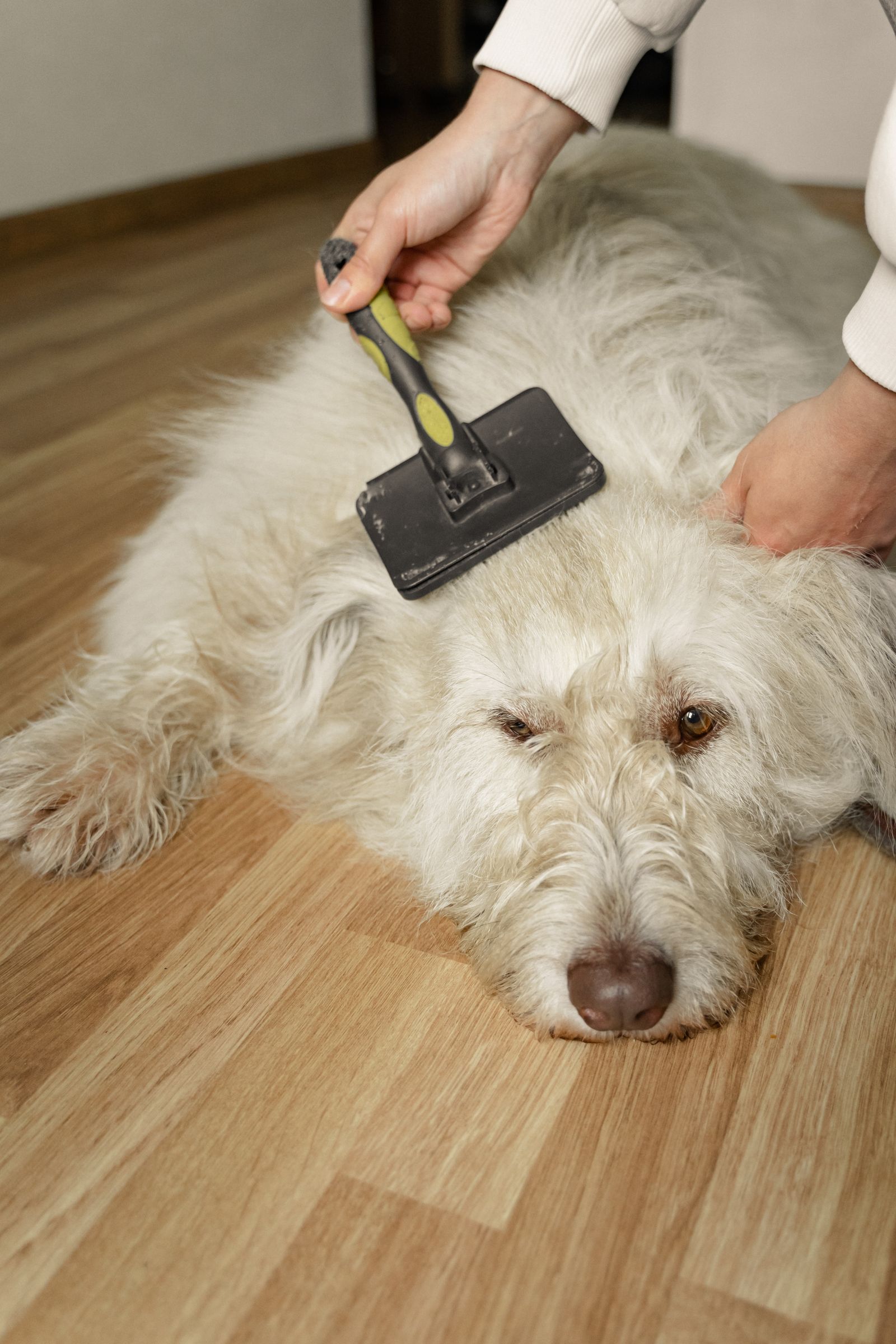
Daily. Not weekly. Daily. The heat and humidity here mean dogs don't blow coat once a year — they shed steady, all twelve months. A slicker brush or an undercoat rake used outside on the patio or in the yard removes the loose undercoat before it hits the floor. Ten minutes. That's it. Ten minutes outside saves thirty minutes of vacuuming inside and keeps pounds of fur out of the returns each month. If your dog tolerates it, a forced-air dryer on cool setting blows out the rest. Do it on the grass, not the tile. The wind takes the cloud away from the house.What about cats — do they need the same routine?
Cats groom themselves, but that saliva-coated fur dries, flakes, and goes airborne same as dog hair. A rubber grooming mitt or a fine-tooth comb used two to three times a week pulls the dead coat out before the cat shakes it loose. Do it on a towel on the lanai or the screened porch. Wipe the mitt on a damp paper towel afterward so the fur doesn't drift back in. Long-haired cats — Maine Coons, Persians, ragdolls — need daily combing behind the ears and under the legs where mats form. Mats pull skin, the cat licks more, more saliva, more dander. Break the cycle at the source.Does bathing really reduce what reaches the ducts?
Yes, but only with the right shampoo and the right rinse. A hypoallergenic, soap-free pet shampoo once every three to four weeks washes away the dander already on the skin. The key is the rinse — five full minutes of lukewarm water until the runoff runs clear. Soap residue dries, flakes, and becomes more dander. Towel dry, then blow dry on cool if the pet allows. Brush again after the coat is dry. You'll pull out a second wave of loose fur that the bath loosened. That second brushing is the one that keeps the ducts clean. Skip it, and you just washed the fur into a tighter mat.What's the deal with paw wiping at the door?
Paws track pollen, mold spores, lawn chemicals, and fine dust — all of it rides the air current toward the return. A microfiber towel and a spray bottle of water by the back door. Two seconds per paw. Front paws first, then back. The towel traps the grit. Wash the towel weekly. In rainy season, add a shallow tray of water for a quick dip before the towel. It feels like extra work until you see the filter at month three — white instead of gray. That's the proof.Can the right vacuum help between groomings?
A vacuum with a sealed HEPA system and a motorized brush roll pulls fur from the carpet before it goes airborne. Run it slow — one foot per second — so the brush agitates the fibers and the suction captures what lifts. Empty the canister outside, not in the kitchen trash. A cloud of dust from an indoor empty defeats the purpose. Twice a week in high-traffic rooms. Once a week everywhere else. The vacuum doesn't replace brushing. It catches what brushing missed.How do these habits change what the air handler sees?
The return grille is the mouth of the system. Every habit above shrinks the meal. Less fur on the coil means better heat transfer — the AC cools faster, runs shorter cycles, uses less electricity. Less dander on the blower fins means the motor doesn't work as hard to spin. The filter stays white longer, so you change it every ninety days instead of every thirty. The ducts stay smooth inside, so air moves without turbulence. Turbulence deposits debris. Smooth flow keeps it moving to the filter where it belongs. The whole chain works because the first link — the pet — sheds less into the room.What about air purifiers and upgraded filters?
They help, but they're not a substitute. A MERV 11 or MERV 13 filter catches smaller particles, but it also restricts airflow more. If the system wasn't designed for that resistance, the blower strains, the coil freezes, the compressor overheats. A portable HEPA purifier in the bedroom cleans that room's air, but the ducts still collect what the purifier misses. Grooming habits attack the source. Filters and purifiers manage the symptom. Do both, but start with the brush. Brushing technique is where most of this is won or lost, so watch how a professional groomer actually de-sheds a coat before you start on your own dog: The video is a groomer's de-shedding lesson. She explains why the metal-edged shedding tools many owners reach for first — the kind sold as miracle de-shedders, along with coat rakes and carding knives — can damage skin and coat when they are used too often or used wrong, and why the older tools, a brush and a comb, do the job more gently. She works through her preferred method: loosening the undercoat in the bath with a de-shedding shampoo and conditioner, using a slicker brush on heavy shedders while the coat is wet, and finishing with a dryer to blow out the loose undercoat. The point for your ducts is simple: every handful of dead coat that comes out in the tub or on the patio is a handful that never floats to your return grille. She is also honest that no tool cures shedding completely — the habit matters more than the gadget.When to call us
DIY is great, but some jobs need a pro. If the problem persists, you spot anything dangerous, or you'd rather have an expert handle it, call (754) 432-8931 — Hallandale Air Duct Care serves Hallandale Beach and Broward (Mon-Sat 8AM-8PM). No pressure, no upsells.